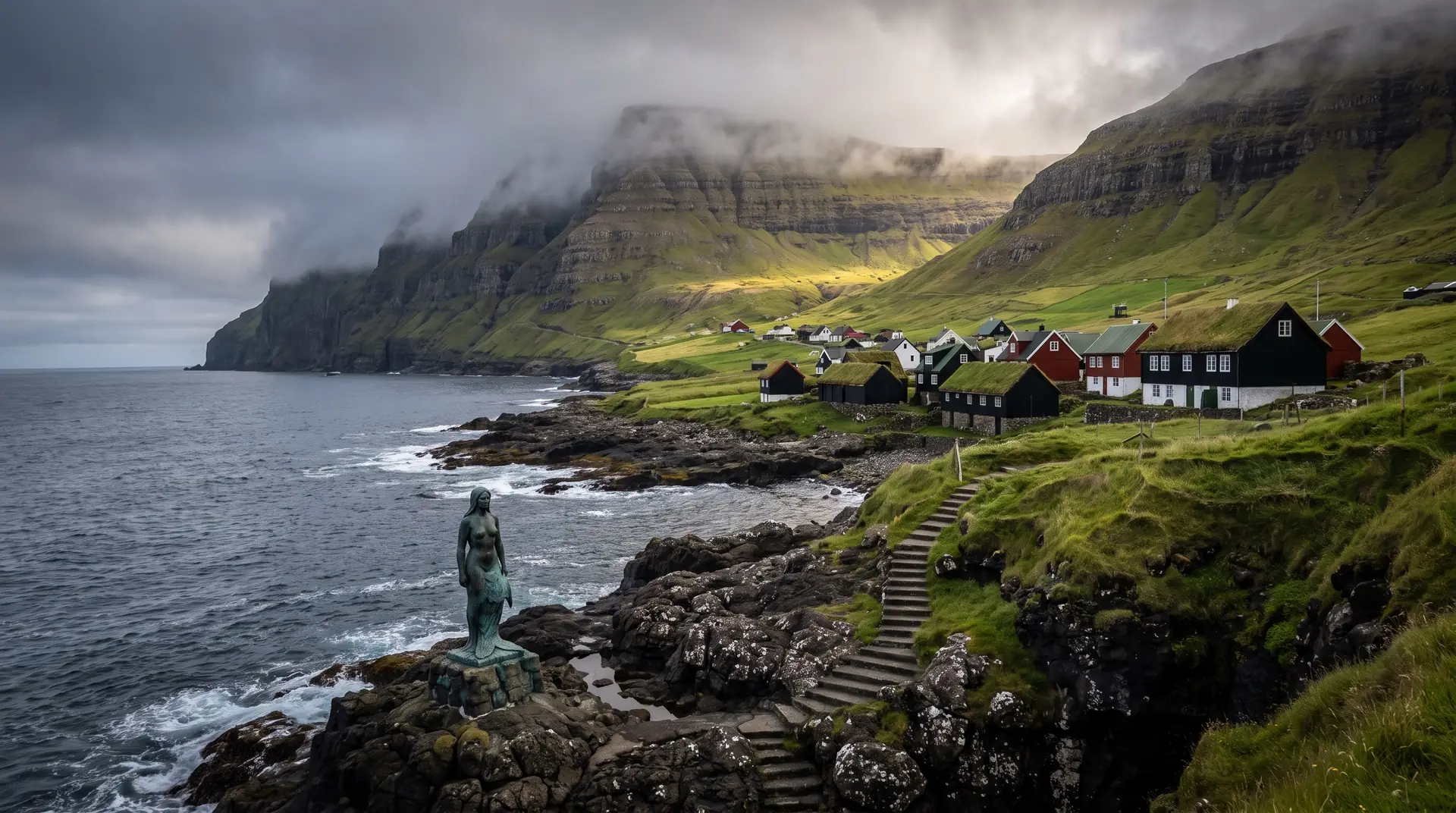
Mikladalur.
A cliff stairway down to the bronze woman who was once a seal.
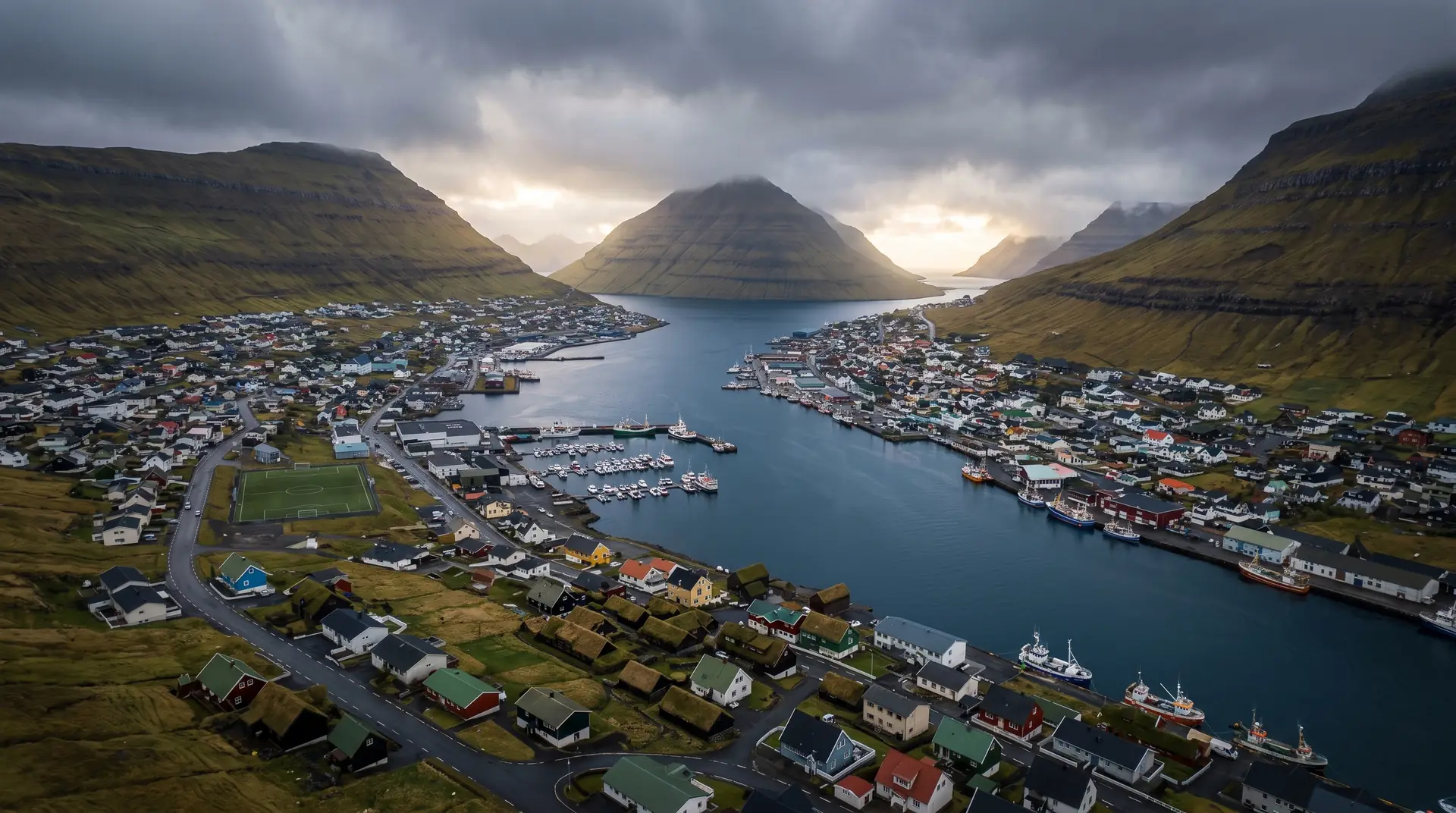
Twenty-seven people live on Kalsoy’s east coast above a stairway that drops to the water’s edge. At the bottom stands Kópakonan — Hans Pauli Olsen’s bronze and steel seal woman, unveiled on 1 August 2014.
- 01The stairway holds the drama — the village stays quiet above it
- 02Rogue waves reach the statue’s rocks without warning
- 03Single-lane unlit tunnels separate every village on Kalsoy
- 04Ferry capacity, not distance, decides who gets here
The place, as it lets itself be seen.
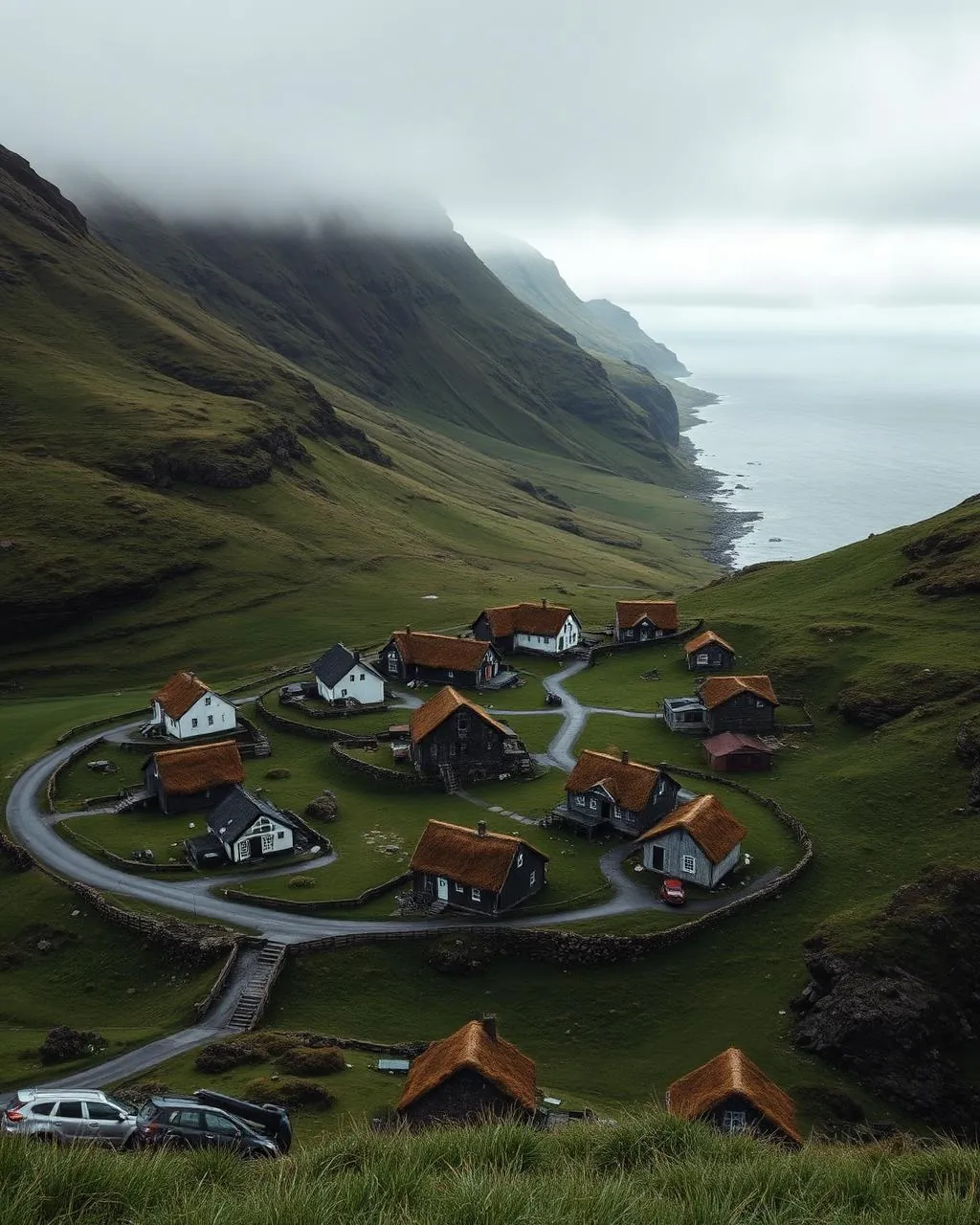
How the weather
behaves here.
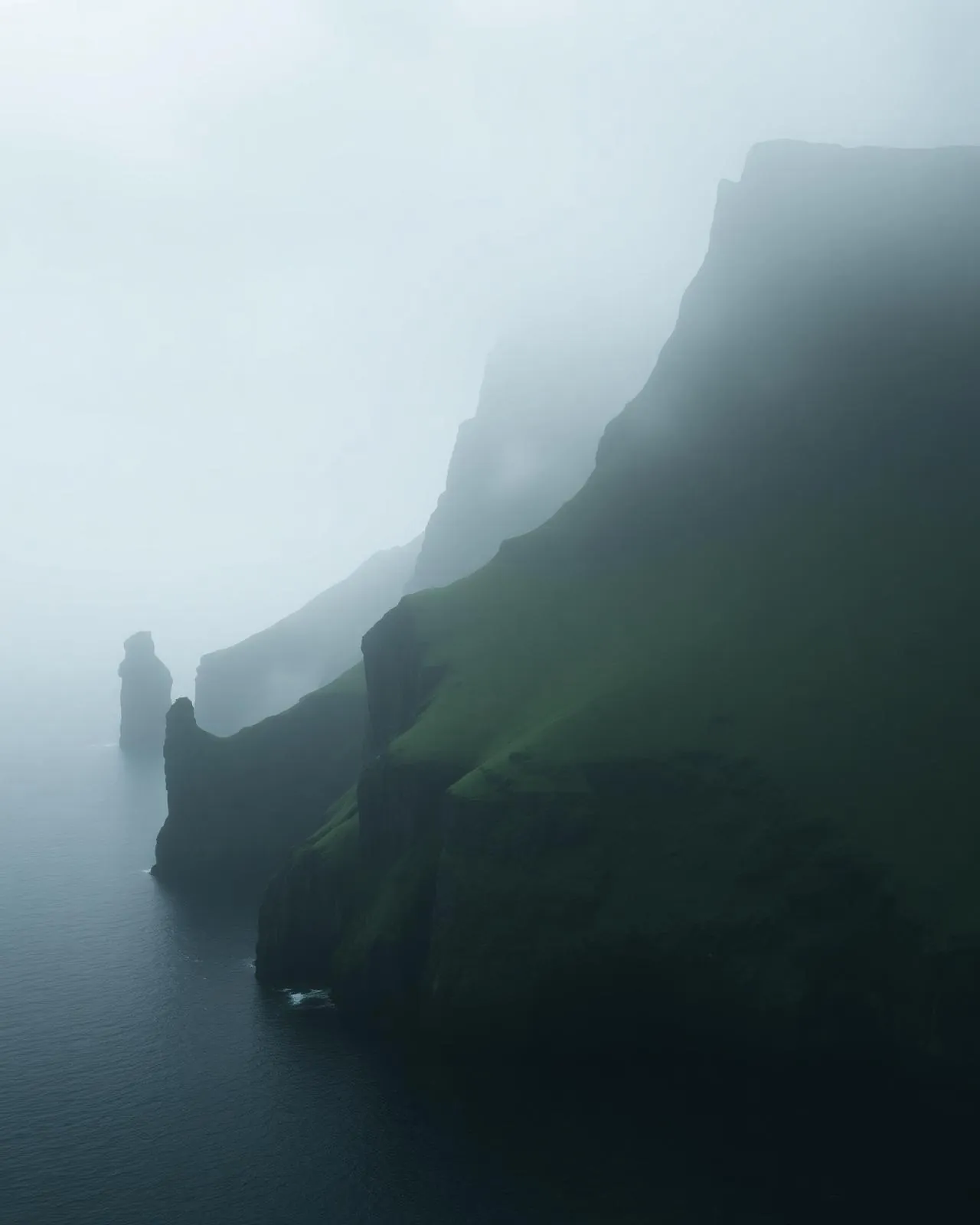
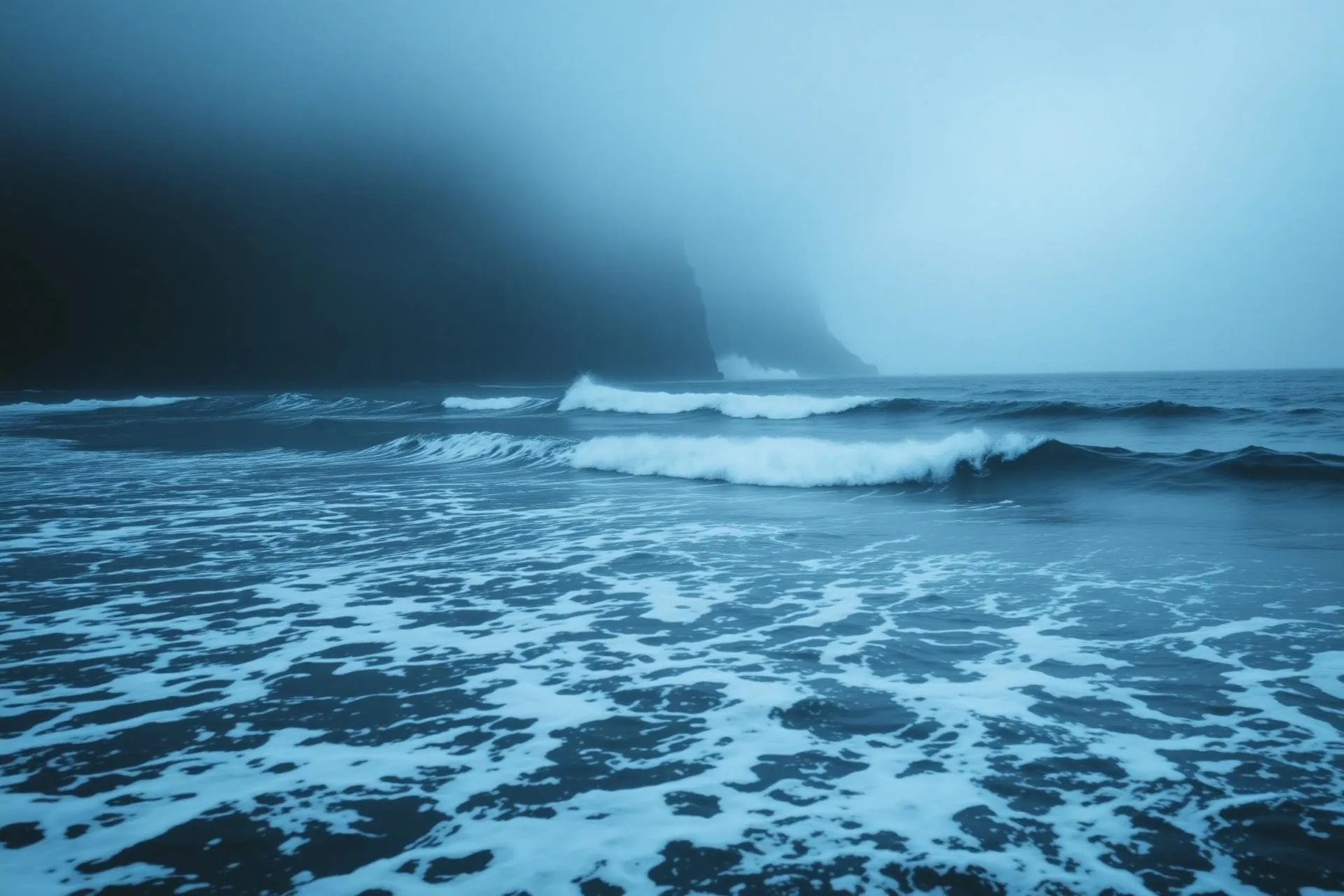
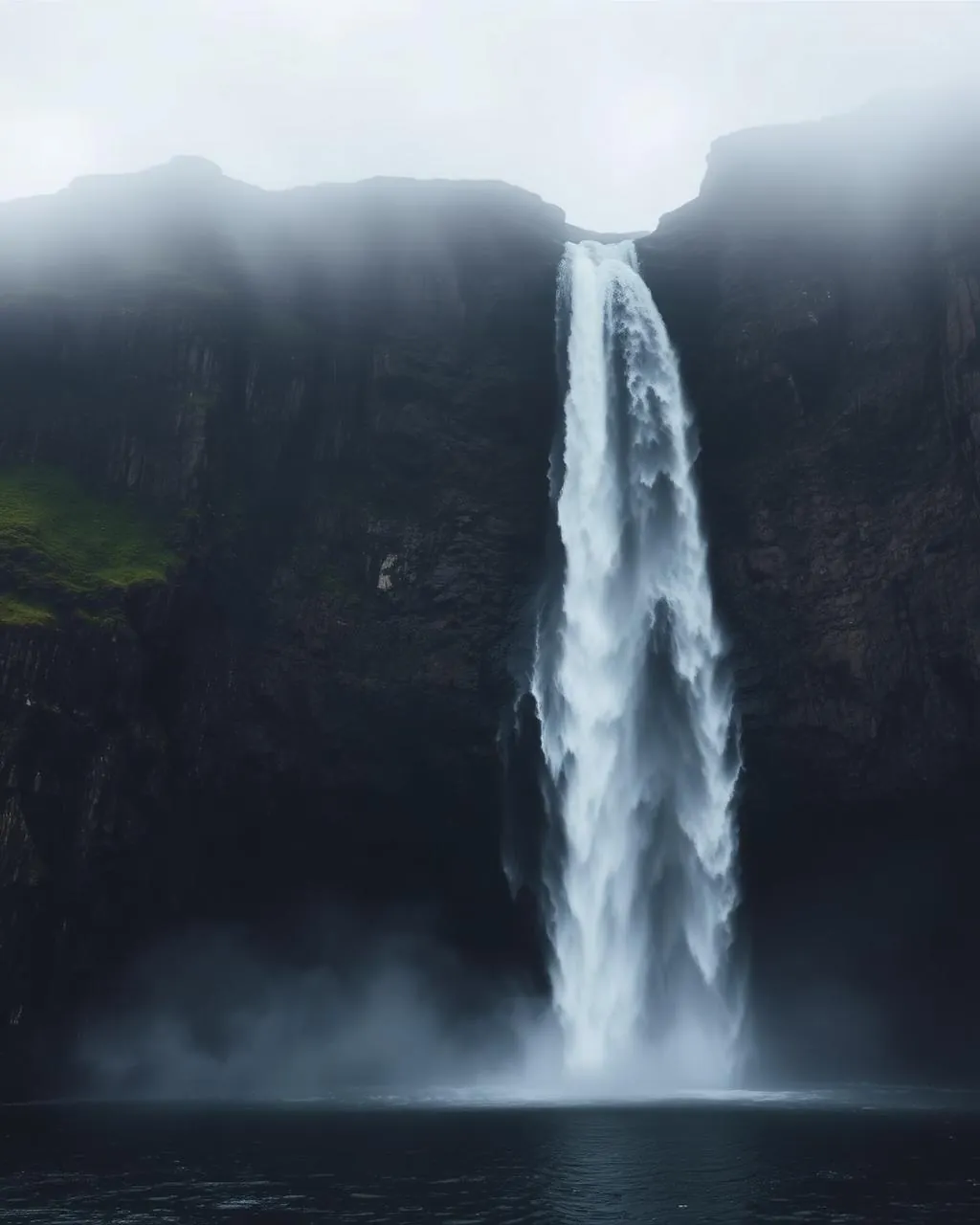
Read the air before you arrive. Fronts pass fast in the Faroes — fog, wind, and light can rewrite this place within an hour.
How to arrive,
how to stay.
- Access
- Ferry 56 from Klaksvík to Syðradalur, then north through Kalsoy’s single-lane tunnels
- Parking
- Informal along the village street · leave the lane clear
- Ferry
- Klaksvík → Syðradalur · 20 min · book the car slot early · fares at ssl.fo
- Fees
- Free · no charge for the stairway or the statue
- Difficulty
- Easy
- Duration
- 1–2 hours · a half-day with Kallur
- Best season
- May–September
- Crowd level
- Quiet
- Drone
- Restricted
- Safety
- Steep wet steps · the sea reaches the lower rocks in swell
A field guide
for the light.
Grey swell with a break in the western cloud. Shoot from the last step so the swell rises behind her shoulder rather than under her feet.
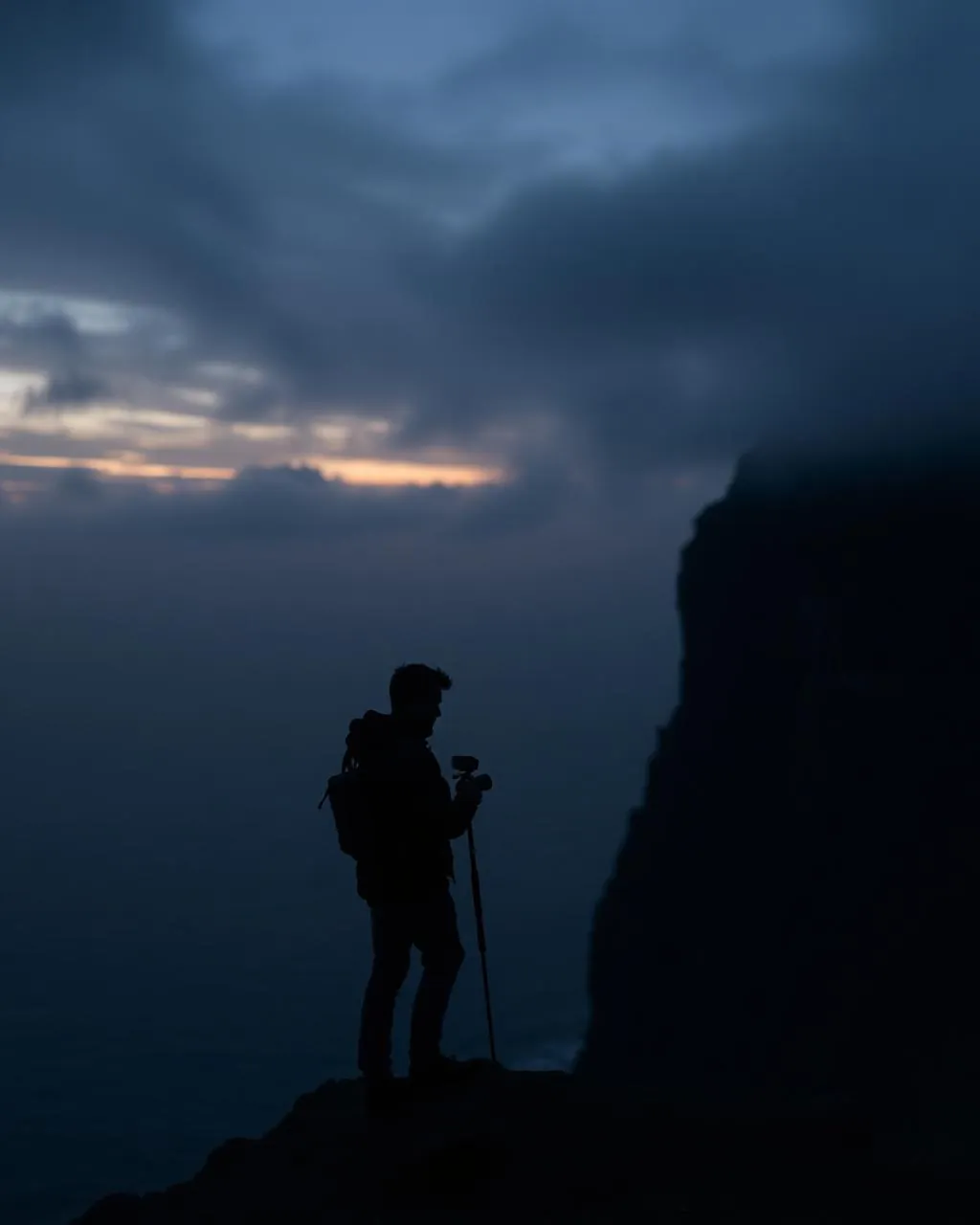
- 24–70mm standard
- 16–35mm low at the statue
- 70–200mm from above the village
The village keeps you 150 m back · launch from the coast north of the stairs and stay under 120 m.
June for late light · September for heavy sea
62.34° N · 6.77° W
Surrounding villages, hikes, and weather overlays — open the full atlas to explore in motion.
Within an
afternoon's drift.
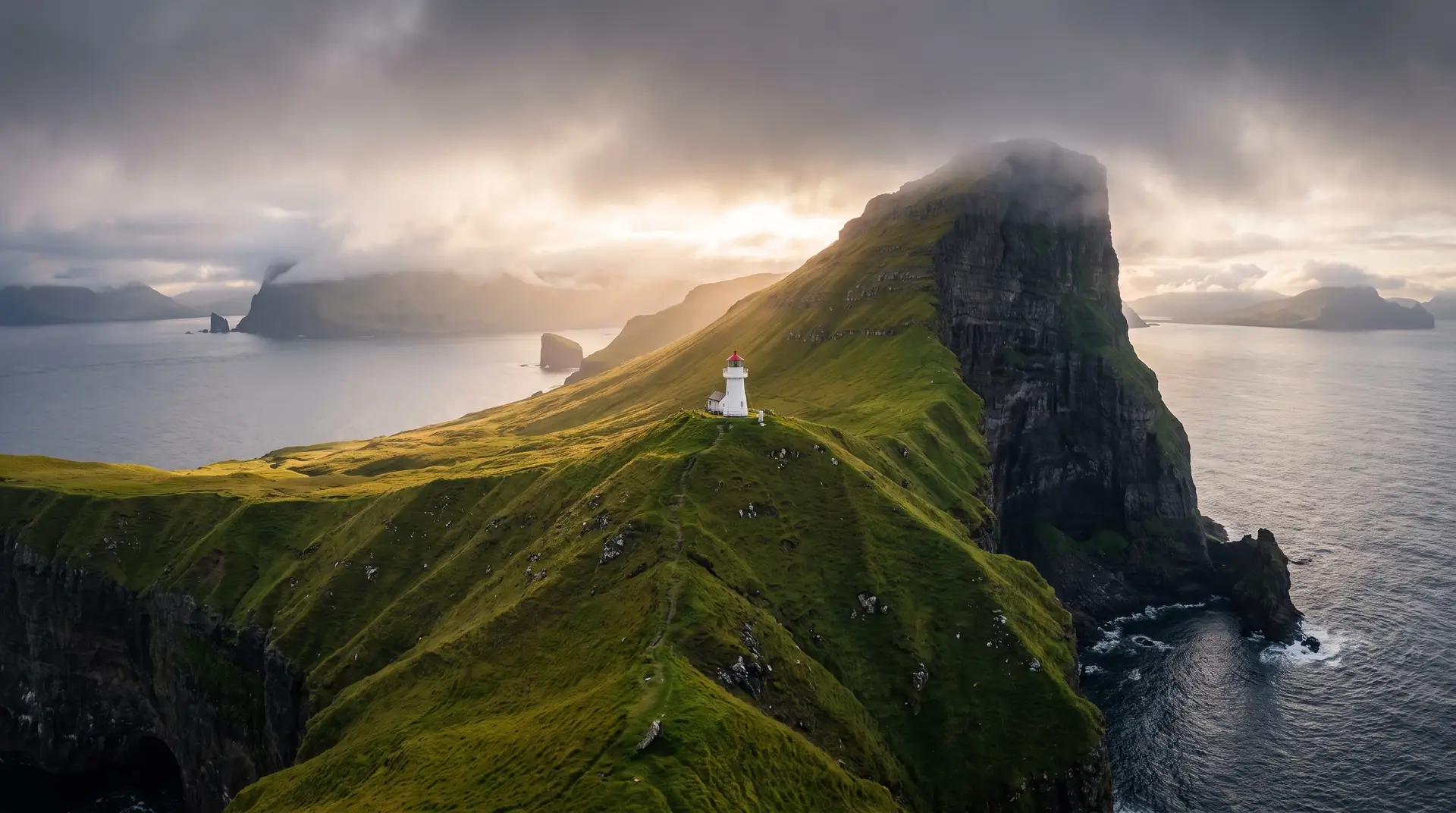
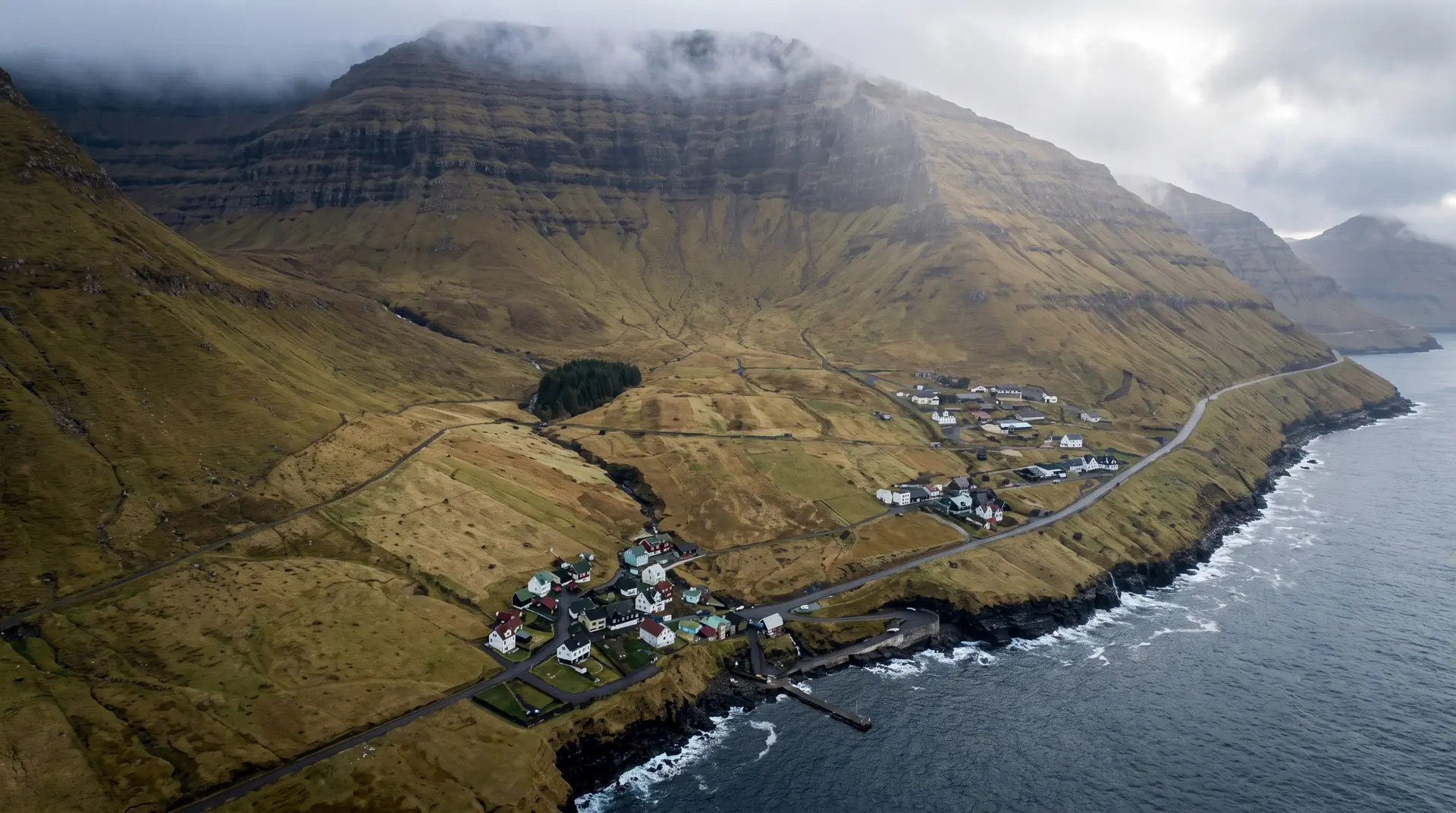
The woman who came back for her skin.
“Every Faroese child knows how the story ends, which is why nobody in Mikladalur calls the statue decoration.”
The seal wife is the islands’ hardest legend. Seals come ashore, shed their skins and take human form; a farmer of Mikladalur hid one woman’s skin and kept her as his own. She found it years later and went back to the sea, and what followed was not a reconciliation. It is a story about taking something that was never offered, and it is told here without softening.
Hans Pauli Olsen’s answer to it stands on the rocks below the village: three metres of bronze and stainless steel, unveiled on 1 August 2014, engineered to take a wave rather than be sheltered from one. Placing her at the waterline instead of on the green above the houses is the whole argument of the piece.
Getting here is the other half of the visit. Kalsoy has one road, threaded through unlit single-lane tunnels, and the ferry from Klaksvík takes a dozen cars at a time — which is why walking on and taking the bus is the local advice, and why the village stays as quiet as it does.