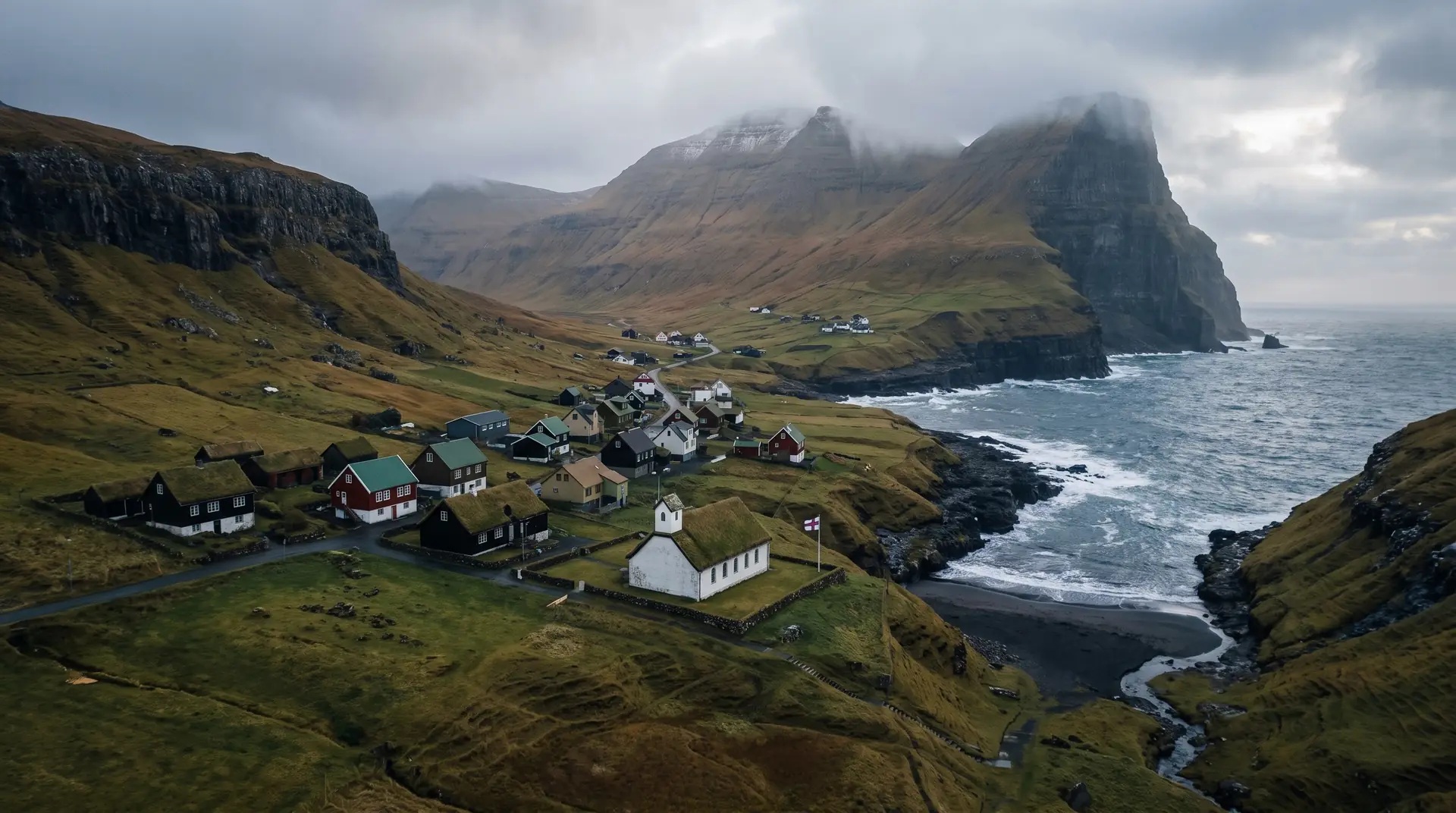
Fámjin.
A west-coast church that keeps the original Merkið in a glass case.
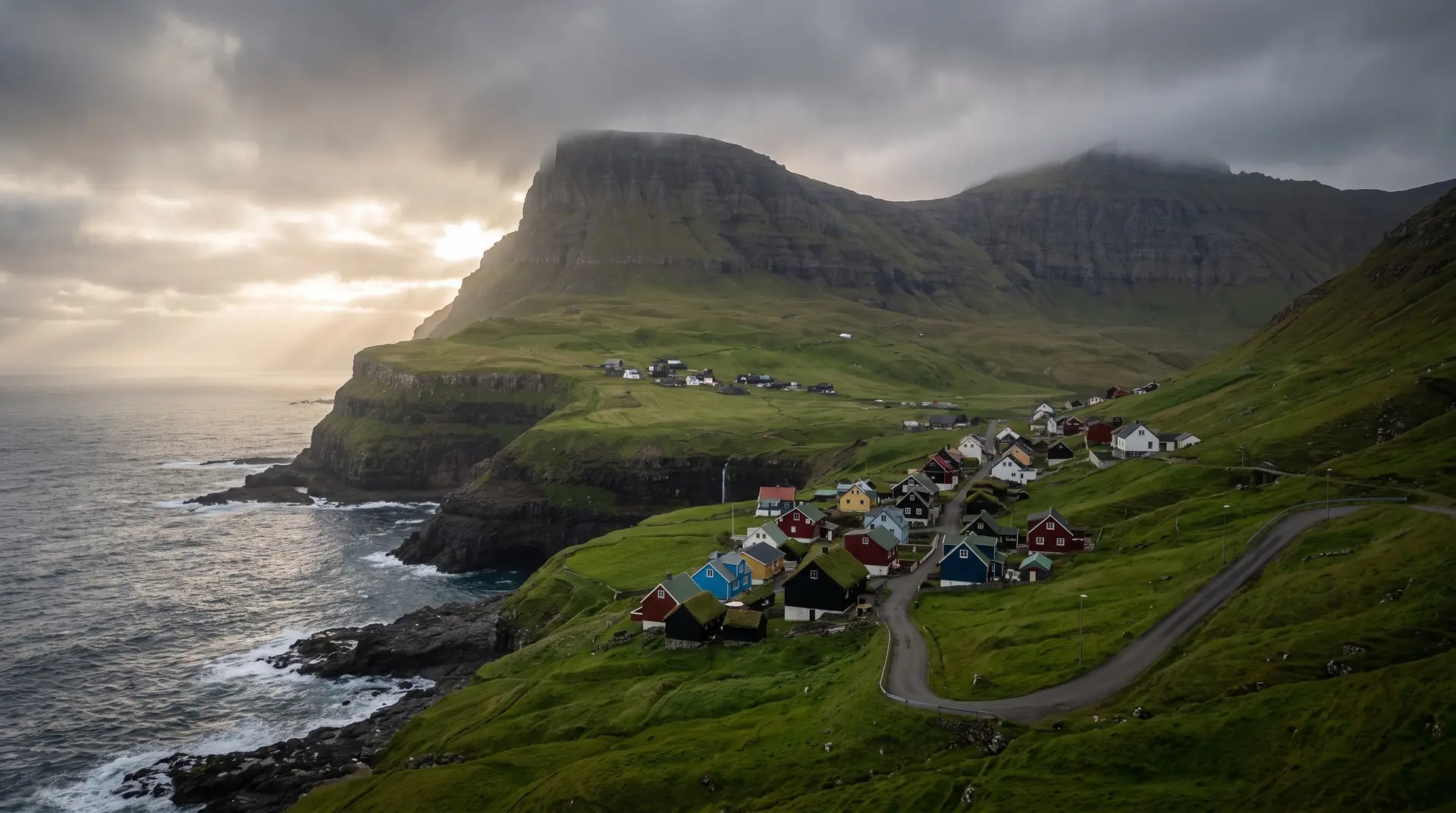
Seventy-two people, a steep road down to the Atlantic, and a church from 1876 holding the first Faroese flag — sewn in 1919 by students led by Jens Oliver Lisberg, and first raised here on 22 June that year.
- 01A national symbol kept in a village church, in a case, unguarded
- 02The road down is short, steep and completely committed
- 03Open ocean to the west; mountains on every other side
- 04The lake behind the village doubles whatever the sky is doing
The place, as it lets itself be seen.
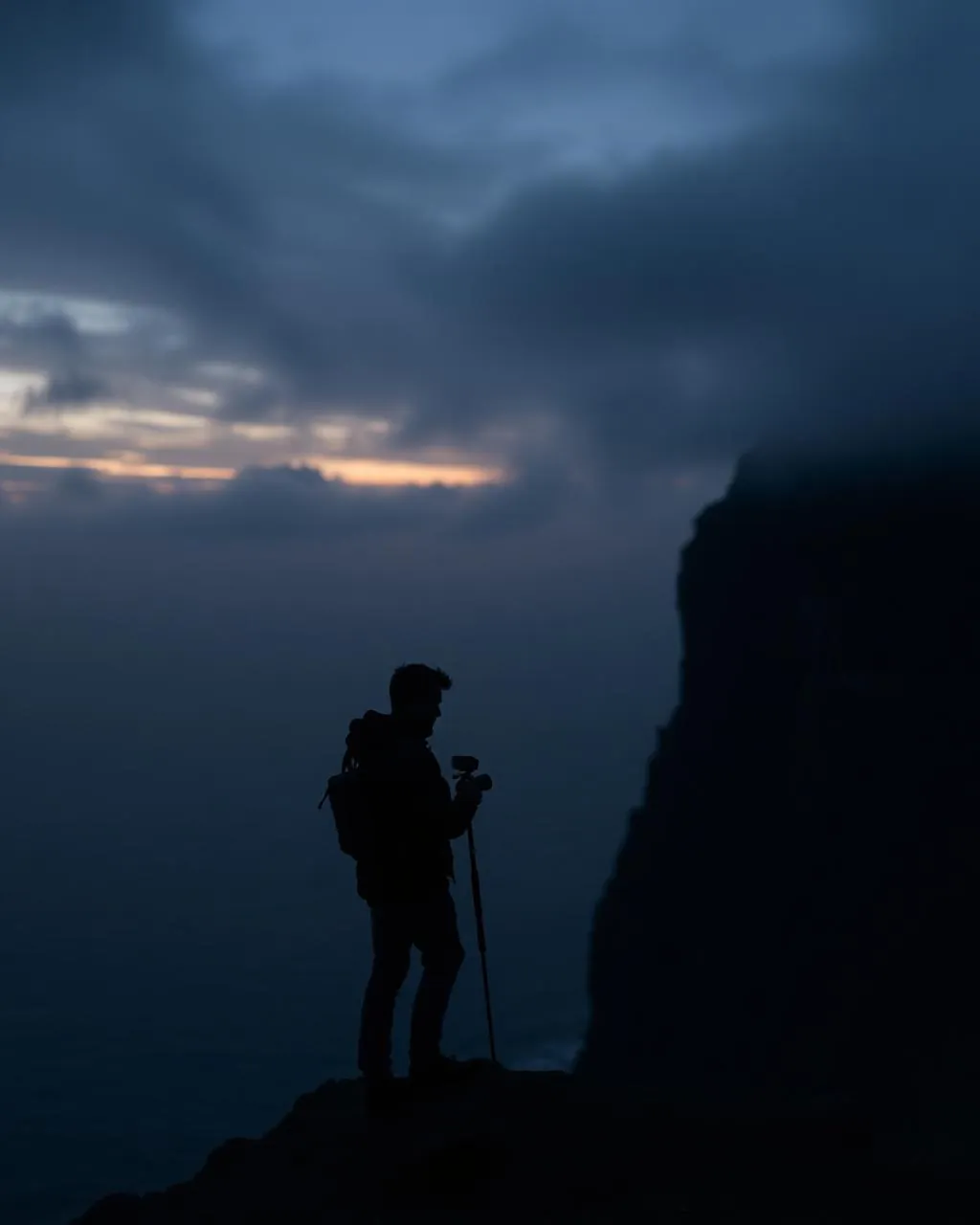
How the weather
behaves here.
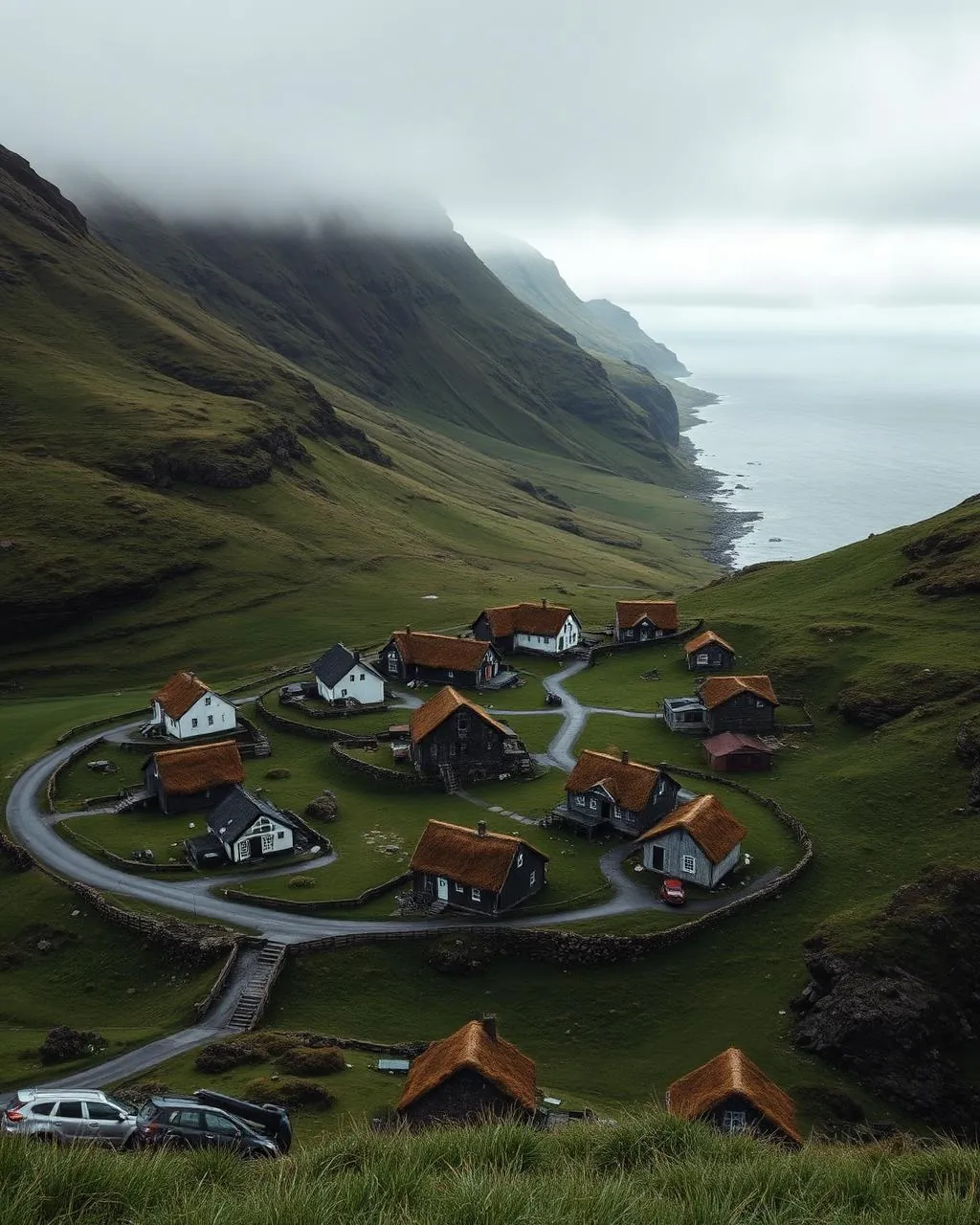
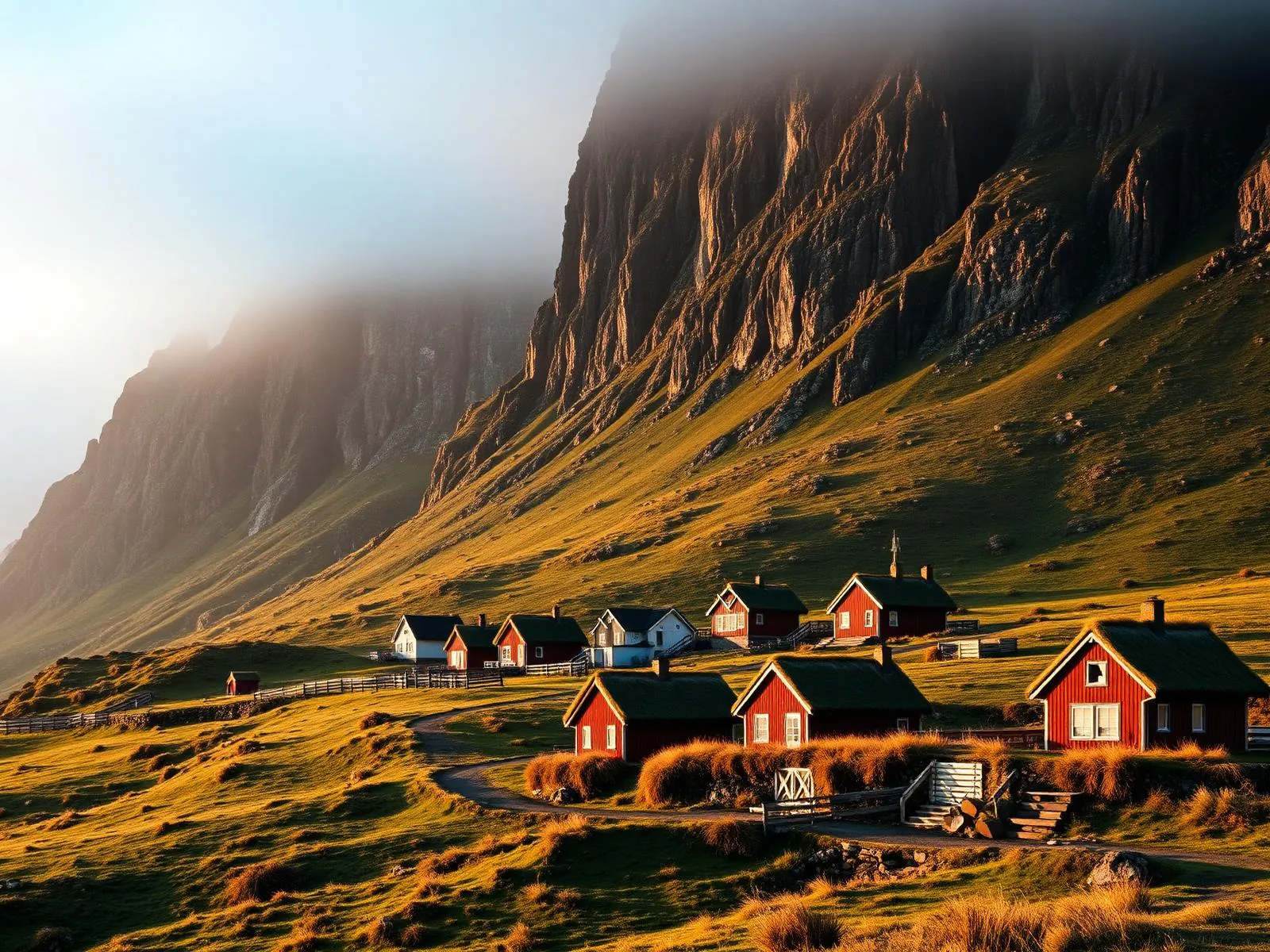
Read the air before you arrive. Fronts pass fast in the Faroes — fog, wind, and light can rewrite this place within an hour.
How to arrive,
how to stay.
- Access
- Ferry to Krambatangi, then over the spine road from Tvøroyri and down the west side · about 15 min from Tvøroyri
- Parking
- Free by the church and the lake
- Ferry
- Tórshavn → Krambatangi · 2 h 05 · 2–3 sailings daily · fares at ssl.fo
- Fees
- The church costs nothing to enter · outside the summer months, ring the Tvøroyri tourist office first to be sure it is open
- Difficulty
- Easy
- Duration
- 30–60 min · longer if the church is open
- Best season
- May–September · far better odds of finding the door unlocked
- Crowd level
- Quiet
- Drone
- Restricted
- Safety
- Steep descent road and wet surfaces · the shore takes full Atlantic swell
A field guide
for the light.
Rain clearing off the west — the village lights before the sea does. Inside, shoot the flag square-on and let the case take the window reflection; the room is dark and the display is small, so open up rather than chase the shutter.
- 35mm prime in the church
- 24–70mm standard
- 16–35mm for the valley
Seventy-two people and a church visitors travel for · 150 m clear, under 120 m, and over the water only.
June for long light · September for storm skies over the bay
61.52° N · 6.88° W
Surrounding villages, hikes, and weather overlays — open the full atlas to explore in motion.
Within an
afternoon's drift.
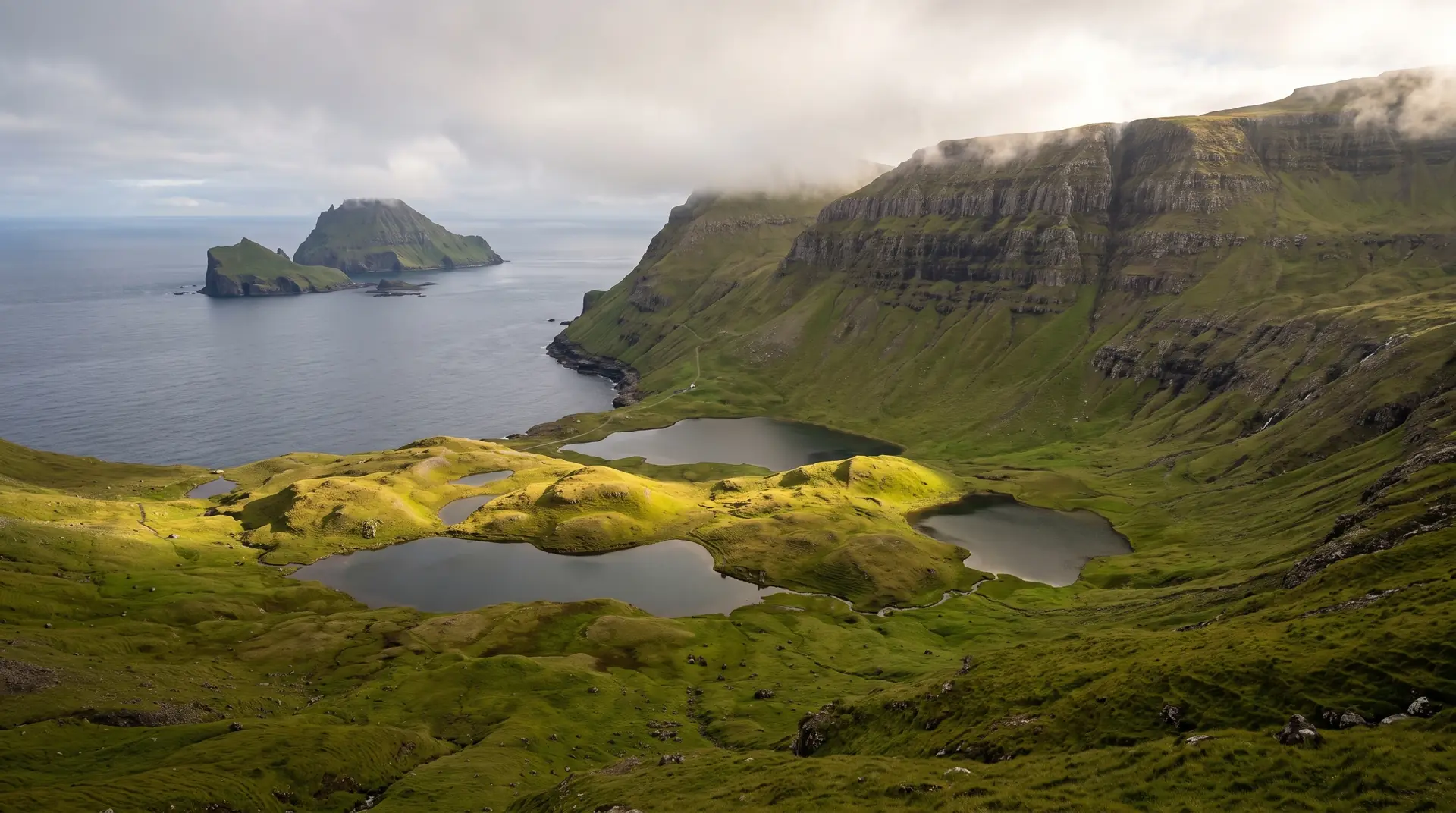
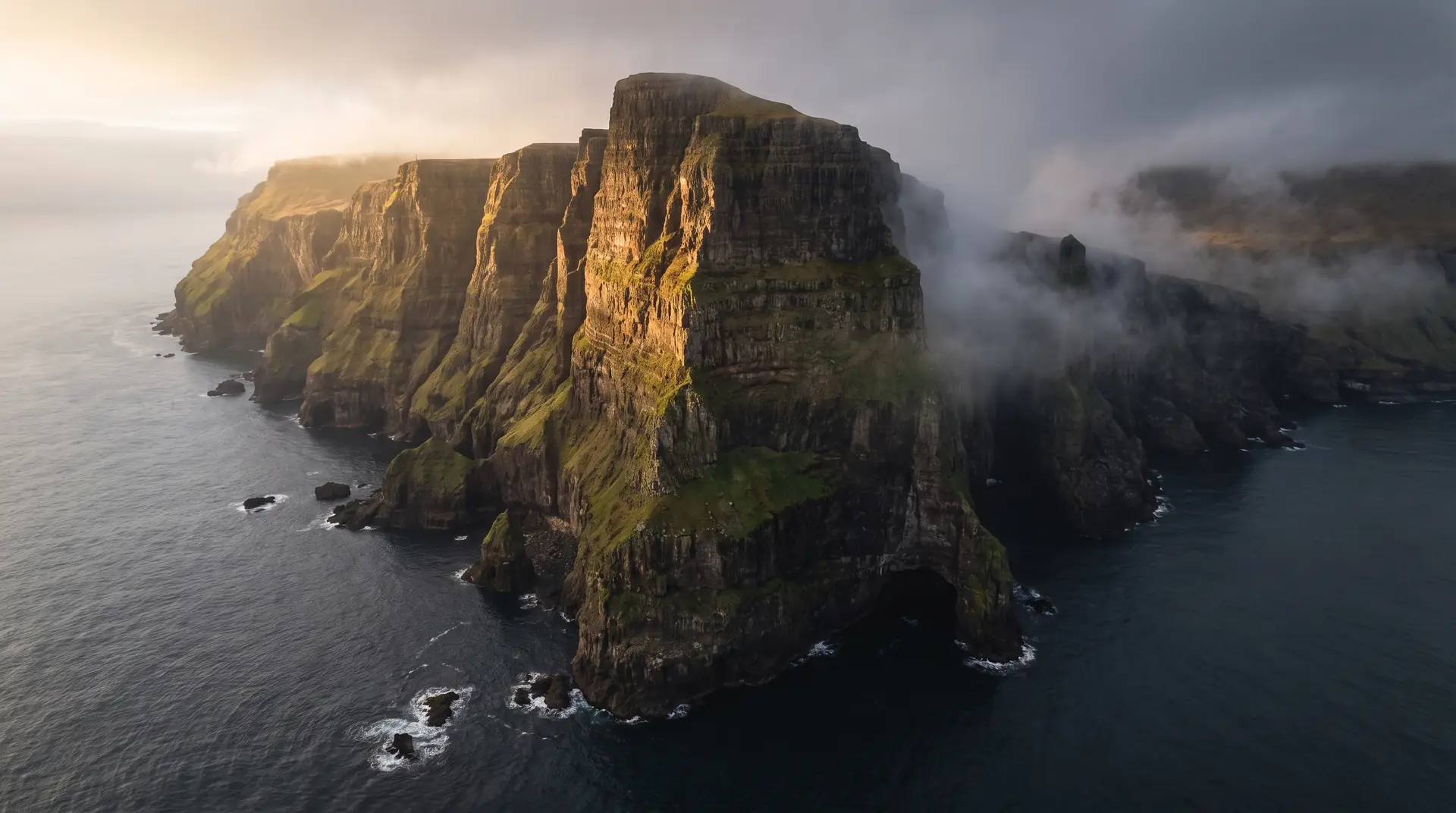
The flag in the glass case.
“A country’s first flag, in a village church, on a coast that faces nothing.”
The Merkið was designed and sewn in Copenhagen in 1919 by a small group of Faroese students, led by Jens Oliver Lisberg of Fámjin. They brought it home, and on 22 June that year it was raised in this village for the first time — a red cross edged in blue on white, made by people with no authority to make a national flag and no intention of asking for any.
It took a war to make it official. From April 1940, with Denmark occupied and the islands under British administration, Faroese vessels flew the Merkið rather than the Dannebrog, and what began as a student banner ended as the recognised flag of the country. The original is in the church at Fámjin, in a case, in a village of seventy-two people.
The village would be worth the detour without it. The road drops off the spine of Suðuroy in a series of committed hairpins to a shelf of green between a lake and the open Atlantic, fifteen minutes and one entire change of mood from Tvøroyri.